Specification · 4 July 2026 · 6 min read
PVD vs electroplating: what specifiers should know
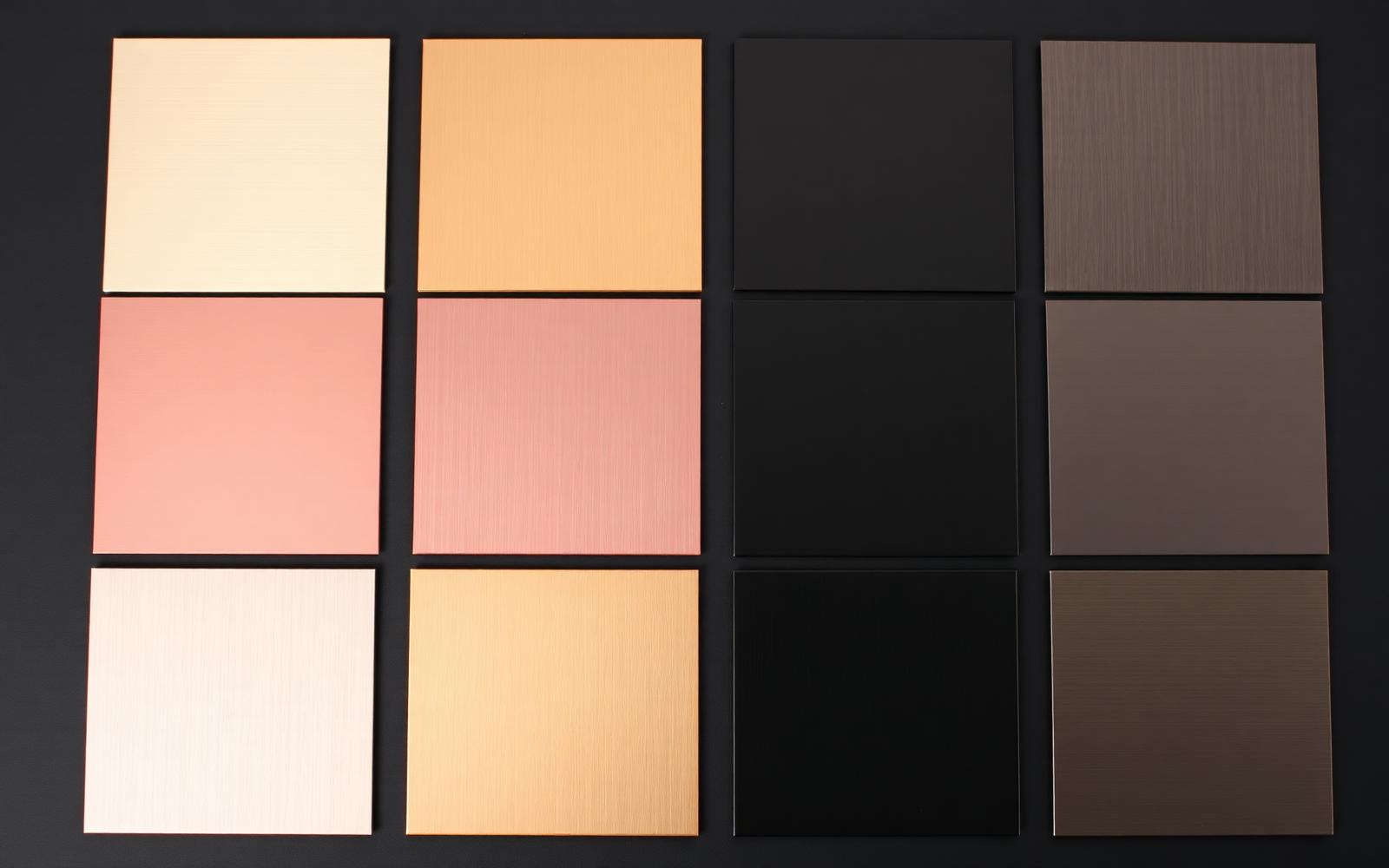
Electroplating and PVD both put metal on metal. The difference is how the layer bonds, how hard it ends up, and what happens to it after five years on a building.
The process difference
Electroplating deposits metal from a chemical bath using current. PVD deposits it from a vapour in a vacuum, with no wet chemistry involved.
That difference shows up in effluent as much as in performance — plating produces a chemical waste stream that PVD does not.
Specify for the maintenance regime the building will actually get, not the one in the manual.
Hardness and wear
PVD layers are typically several times harder than plated layers, which is why they hold up on handles, lift panels and counter fronts.
Plated finishes remain useful for decorative items that are not touched daily, and are often cheaper at small scale.
- PVD
- Hard, UV stable, dry process
- Plating
- Softer, wet chemistry, lower tooling cost
Where each belongs
For architectural surfaces with a fifteen-year expectation, PVD is the defensible specification.
For short-cycle retail props or interior objects that will be replaced with the fit-out, plating may be entirely appropriate.

Ask two questions: will it be touched, and will it see sun. If either answer is yes, PVD is usually the right call.