Interiors · 22 June 2026 · 8 min read
Choosing metal finishes for interiors
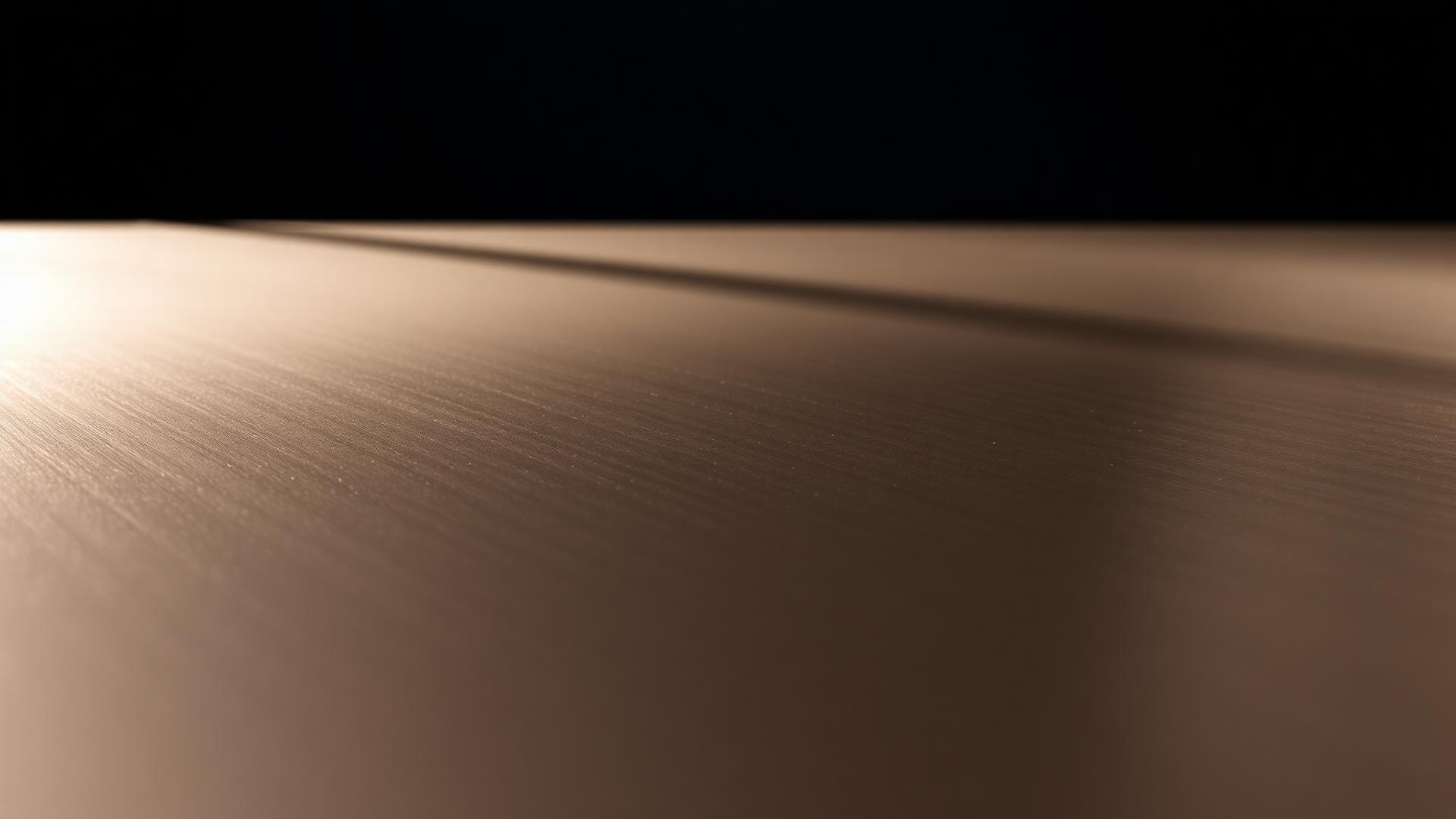
Two panels in the same colour can read as completely different materials. The variable is the surface underneath.
Reflection is a design decision
Mirror doubles a room and shows every fingerprint. Vibration scatters light into a soft cloud and forgives handling. Hairline sits between the two.
Choose the surface against the lighting scheme, not against a sample held in a showroom.
Colour gets specified. Surface gets remembered.
Scale changes everything
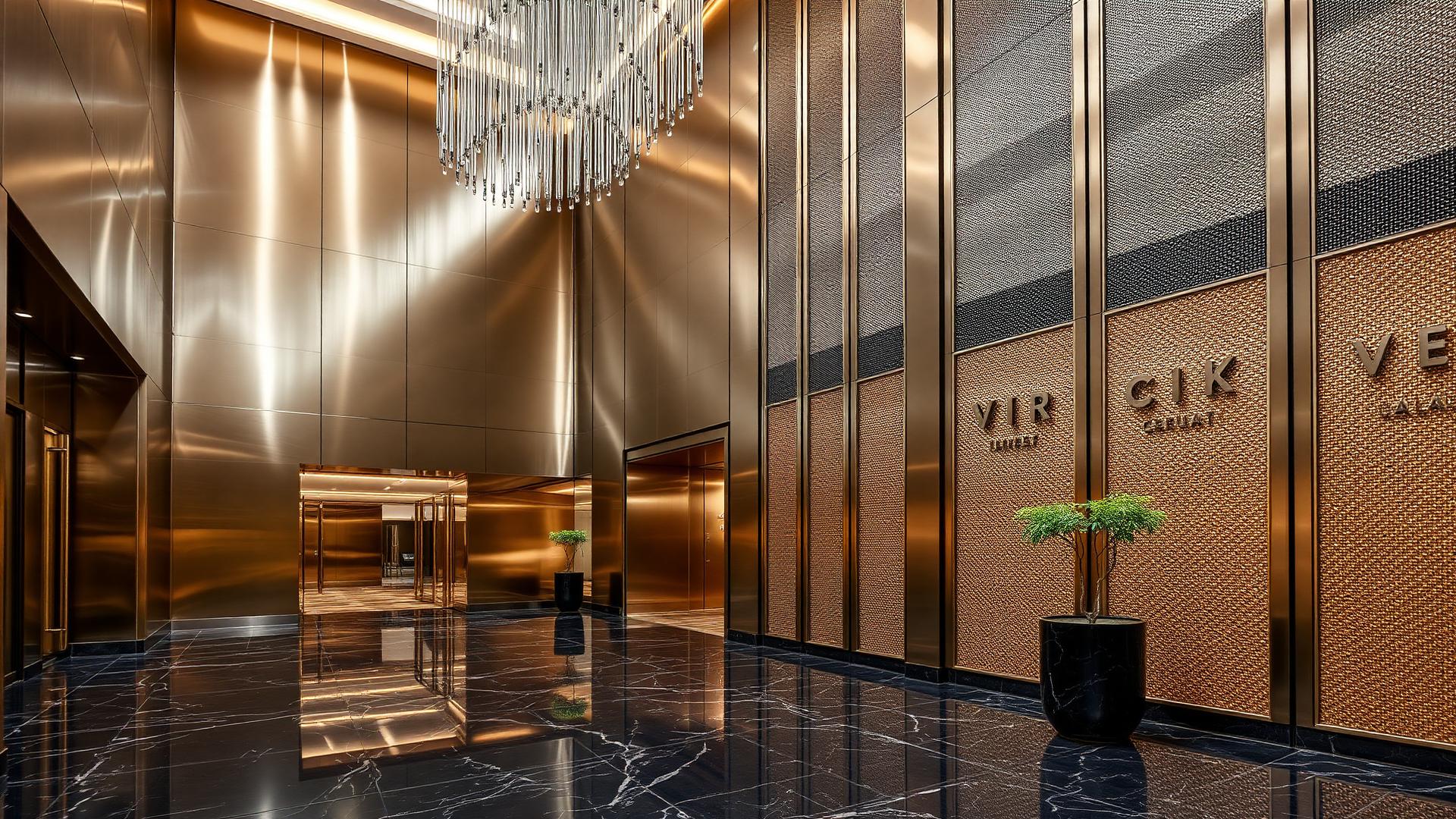
A finish that looks refined on an A4 sample can look busy across a nine-metre wall. Always view a full-height mock-up before locking a specification.
Directional finishes also need a stated grain direction on the drawings, or panels will arrive correct and look wrong.
Matching across textures
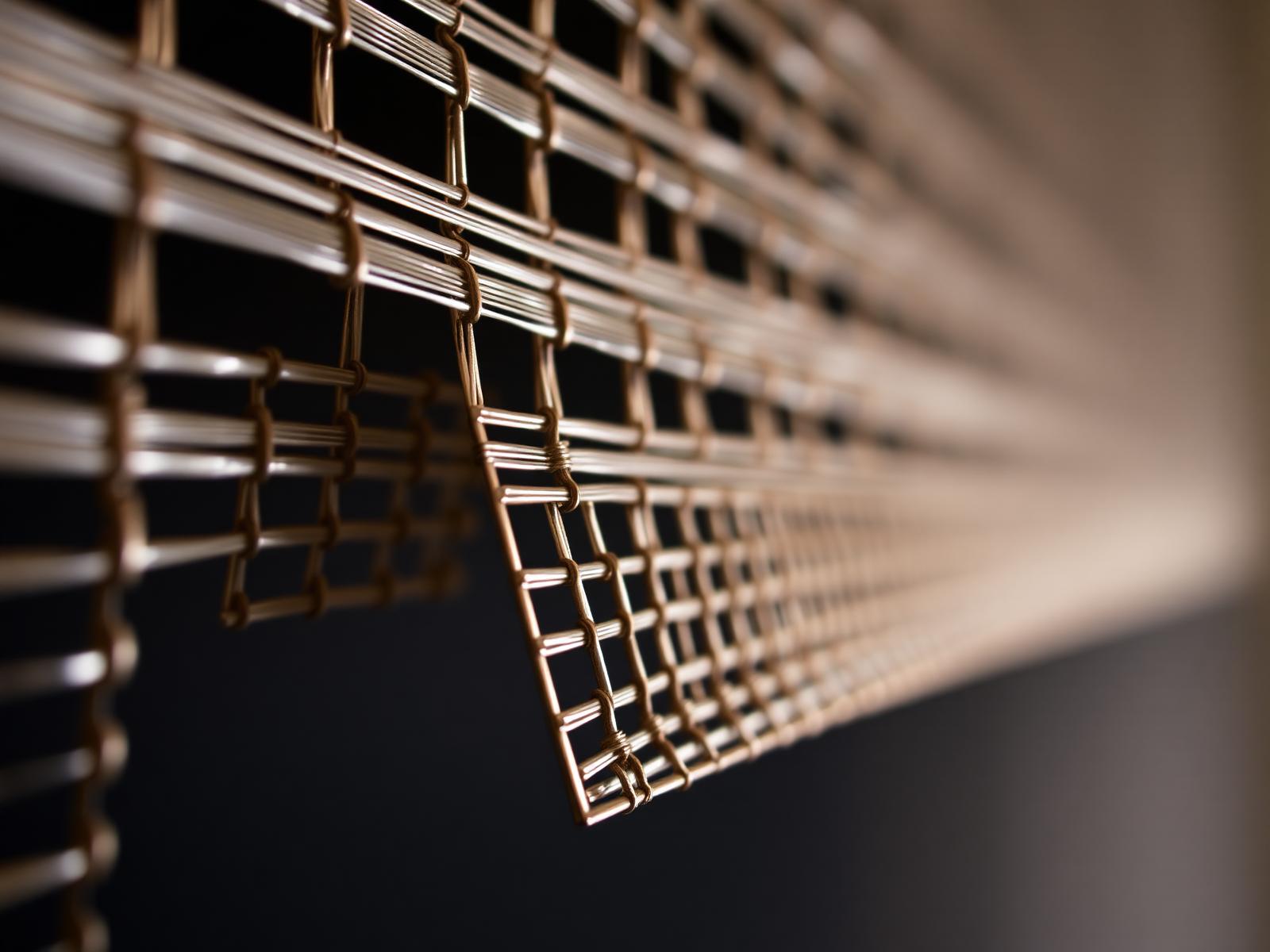
When mirror, hairline and mesh appear in the same room, coat them to one colour target in matched batches.
Different textures reflect differently, so identical coating parameters still produce a visible family rather than an identical match — which is usually the better result.
- High traffic
- Vibration or bead-blast
- Feature wall
- Hairline
- Ceilings
- Mirror
Pick the surface for how the room is used, then choose the colour. Doing it the other way around is where most metal specifications go wrong.