Interiors · 28 May 2026 · 7 min read
Designing with decorative metal mesh
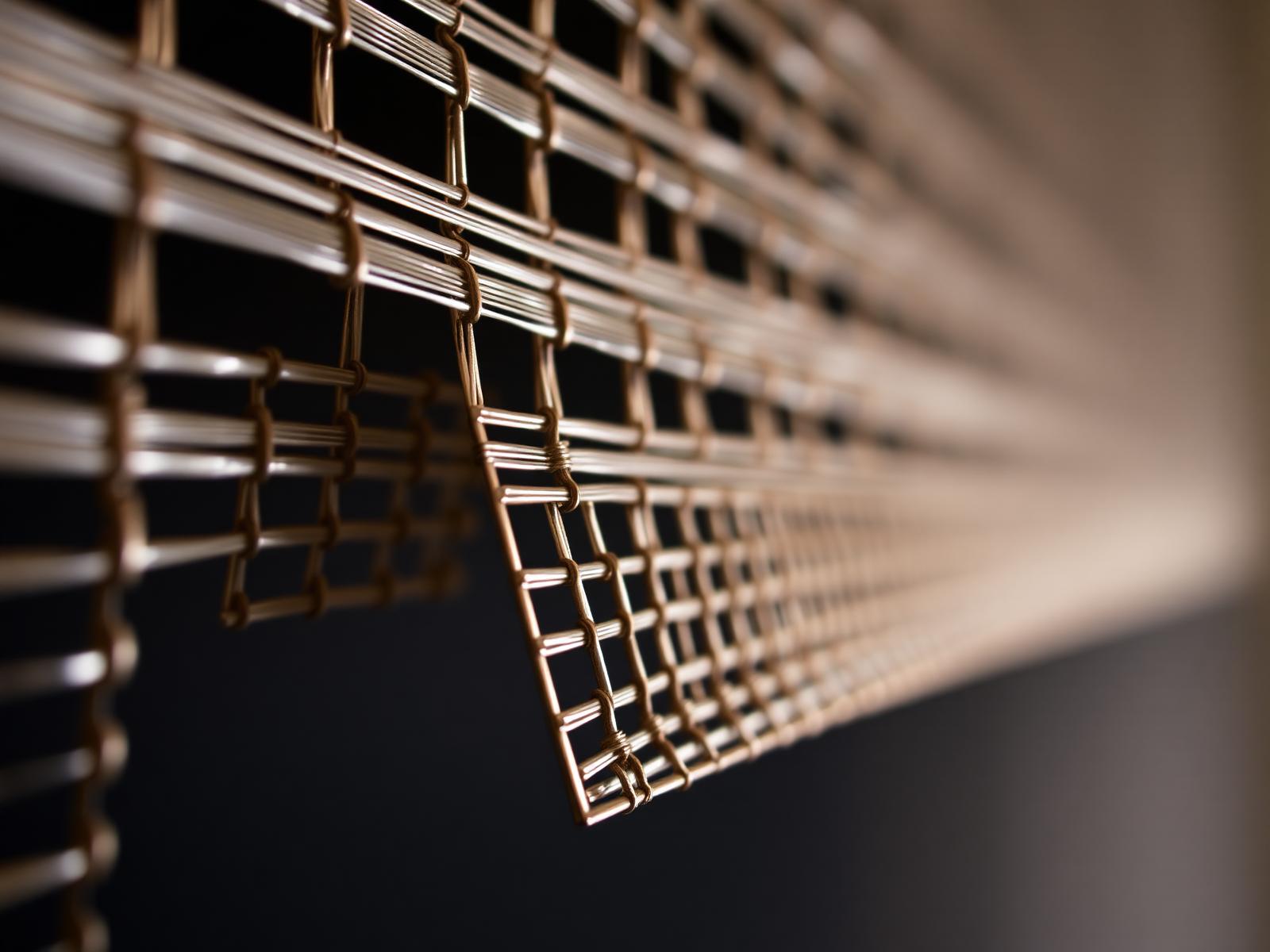
Mesh is the only architectural metal that is simultaneously a surface and an opening. Specifying it well means deciding what you want to see through it.
Weave families
Crimped weaves are stiff and hold a flat plane. Rod-and-cable weaves drape and are used for curtains and cascading screens.
The weave decides the frame: a draping mesh needs tension hardware, a crimped mesh needs a rigid perimeter.
Mesh is specified head-on and experienced at an angle.
Aperture and privacy
Transparency changes with viewing angle. A screen that is open head-on can be nearly solid at 45 degrees, which is exactly what a restaurant divider needs.
Sample full-height and view from a seated position before locking the aperture.
Getting the colour to match
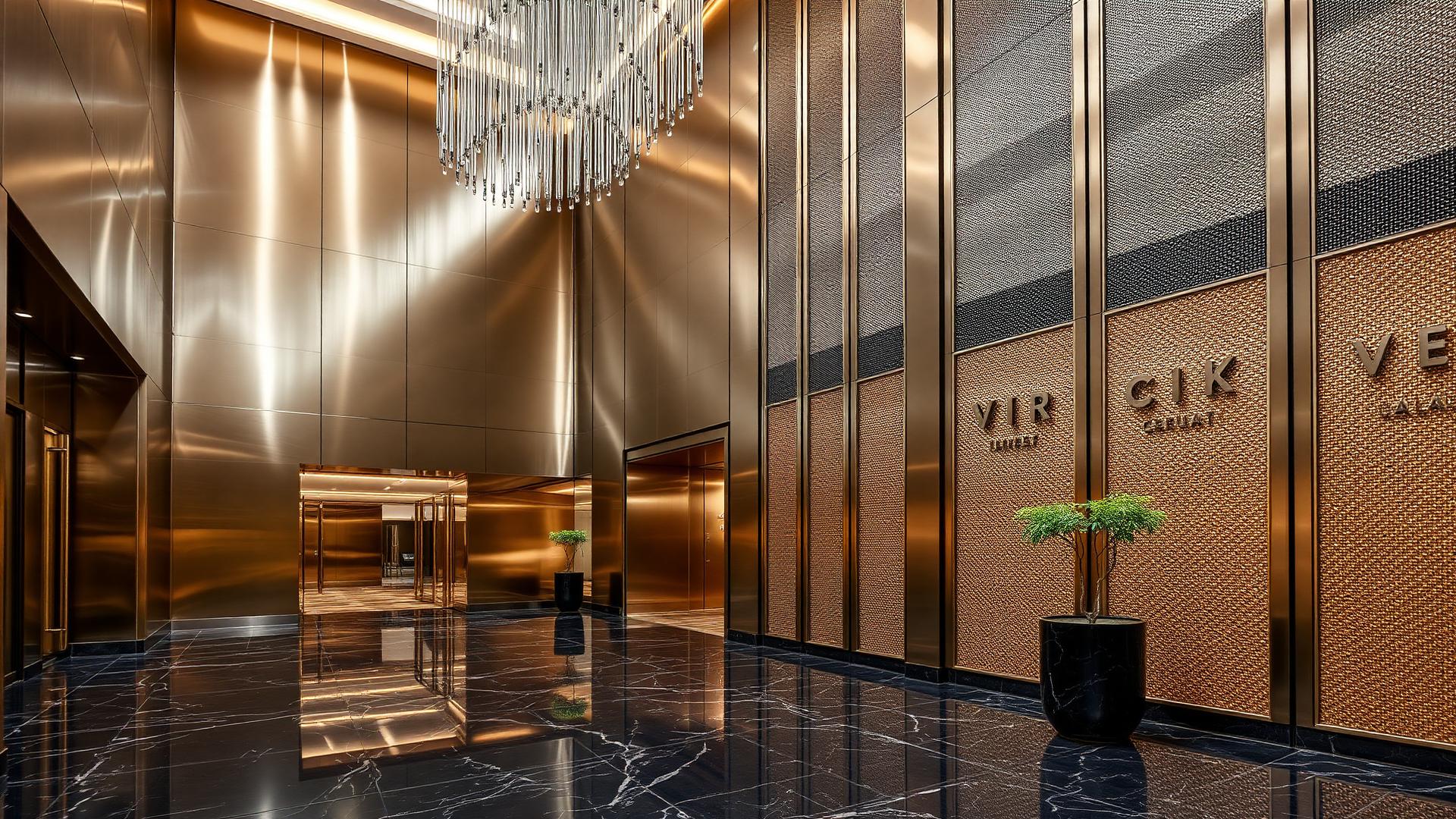
Wire and sheet coat differently because the geometry is different. Coating both in matched batches keeps mesh and cladding in one family.
Framing should be coated with the mesh, never afterwards.
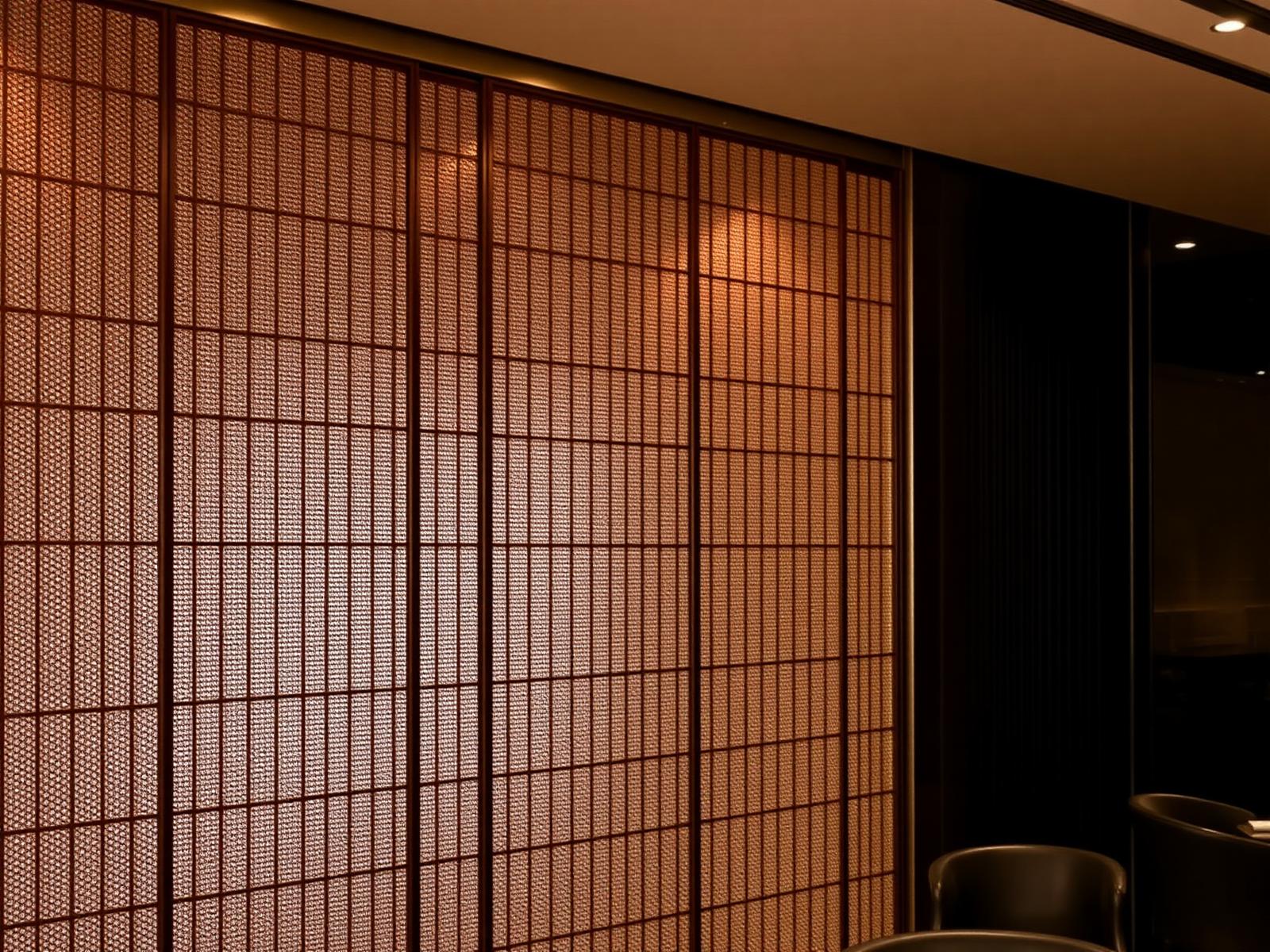
Decide the sightline first, then choose the weave. Everything else — frame, tension, colour — follows from that.